Envelope budgeting, built for two
One budget.
Two names on it.
Hearth gives couples one shared budget to plan spending, log expenses, and always know what's left - no spreadsheets, no guesswork.
The basics
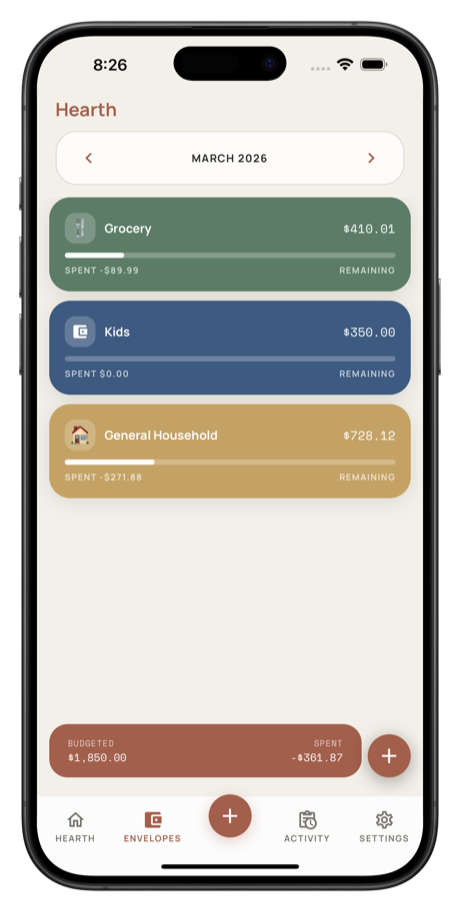
So, what's envelope budgeting?
Every dollar gets sorted into a category before it can quietly disappear into something else.
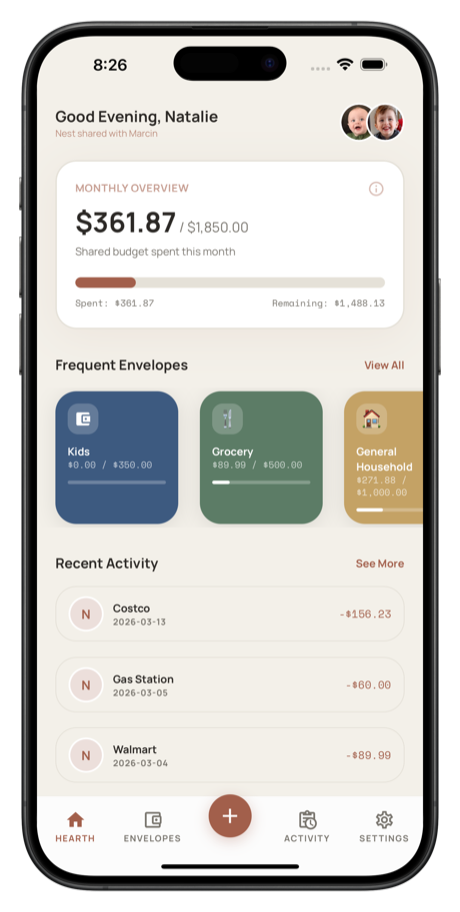
Three envelopes, two people, one running total.
Give every dollar a job
Income divides into envelopes - rent, groceries, the dog, savings - the moment it lands.
Spend from the envelope
Every purchase comes out of a specific envelope, so you always know what's actually left.
Know what's left together
Both partners look at the same envelopes and the same balances, automatically.
How Hearth works
Get in sync from day one.
Invite your partner
Send one link. You're both on the same budget - no separate logins, no separate app.
Build your envelopes
Sort income into the categories you actually spend on together.
Log it, see it, together
Either of you adds an expense in seconds - it updates for both of you instantly.
Insights
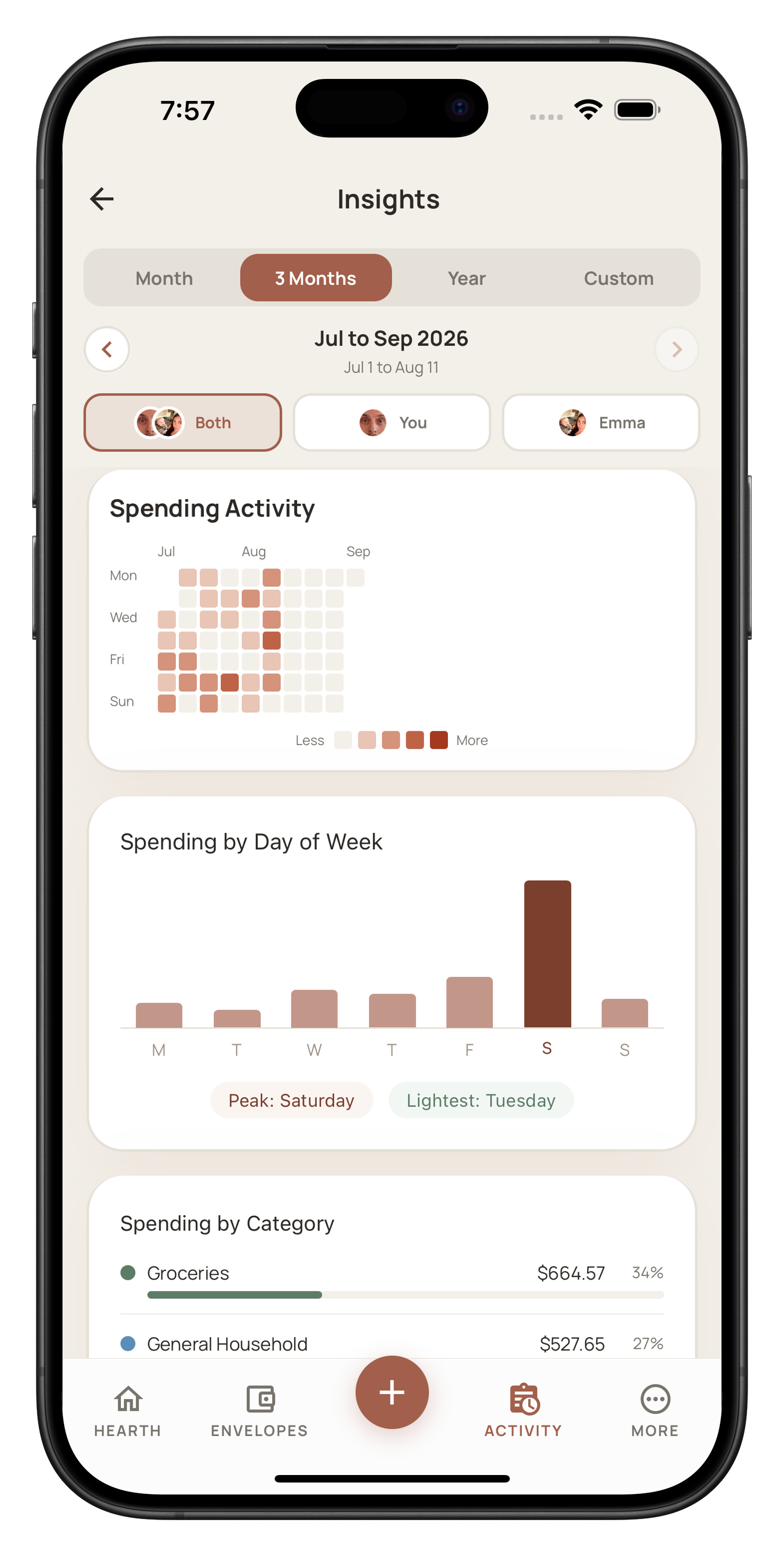
See the pattern before it becomes an argument
Hearth shows where the month actually went - which day you spend the most, which envelope runs out first, what's quietly draining the household budget. Both of you see the same picture.
Let Hearth handle the busywork.
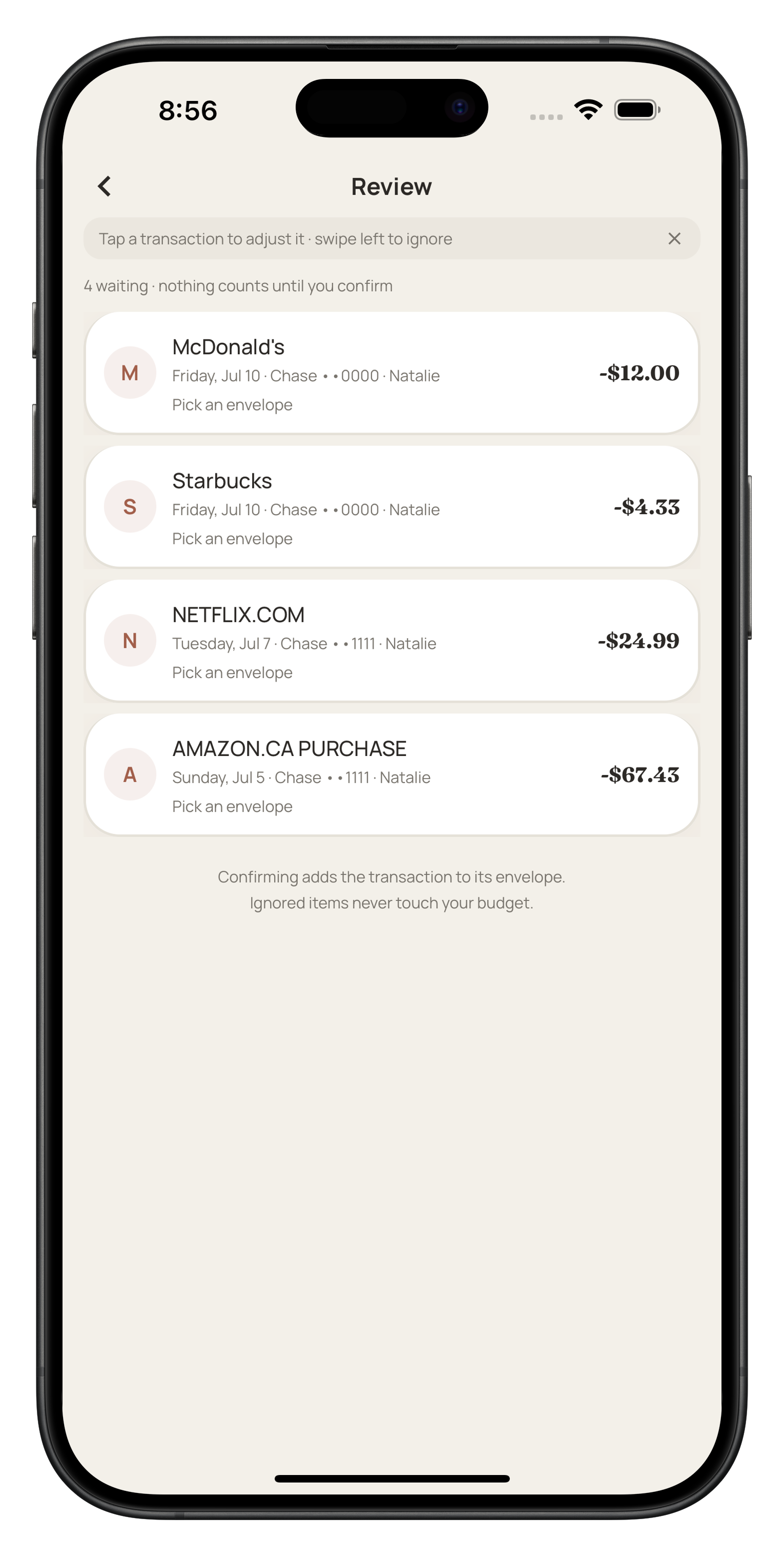
Everything above is free. Upgrade when you want transactions sorted for you, receipts captured in seconds, and deeper answers about your spending.
Bank sync
Connect your accounts and let transactions land in the right envelopes.
Scan receipts
Capture a receipt once. Hearth fills in the details for you.
Go deeper on spending
See the categories, patterns, and habits behind the monthly total.
From couples using Hearth
Fewer money talks. Better ones.
“We used to argue about money every week. Hearth gave us a shared view and the arguments just stopped.”
“The envelope system finally clicked when we could both see it on our phones. Simple and it actually works.”
“I love that it's manual. Logging each expense makes us both more mindful about where our money goes.”