How to Start an Emergency Fund in Canada
By Hearth Team · February 9, 2026
Life doesn't follow a budget. Your car breaks down at 200,000 km. Your company does a round of layoffs. Your furnace stops working in January. These moments don't ask permission-they just happen.
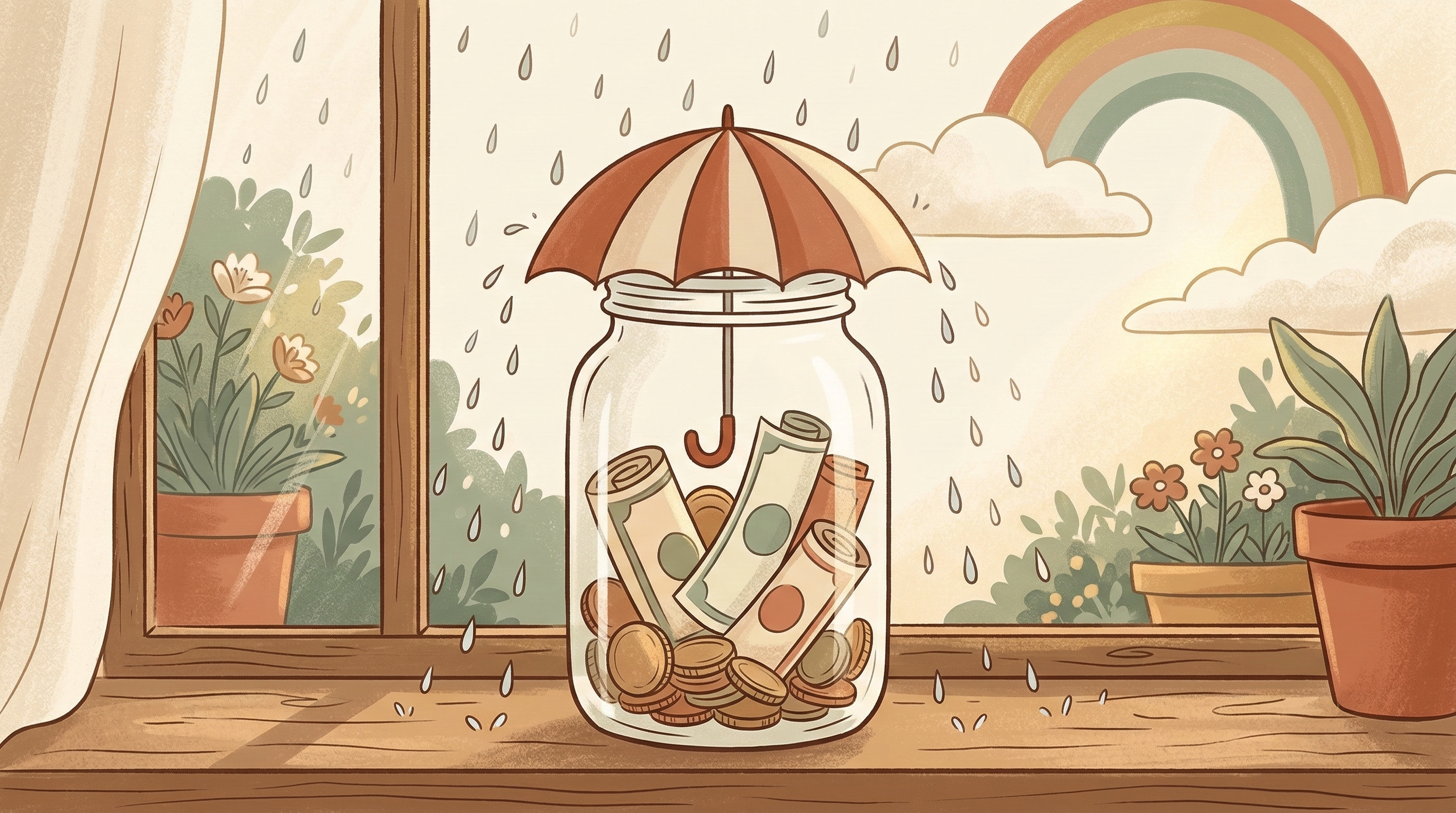
That's why an emergency fund exists: to catch you when life gets messy. Not to stress you out more, but to give you peace of mind. To help you sleep better at night.
How Much Should You Save?
The golden rule: 3 to 6 months of necessary expenses.
Here's the key: we're not talking about your income. We're talking about your essential expenses-rent or mortgage, utilities, groceries, insurance, minimum debt payments. The things you absolutely need to survive if disaster strikes.
Let's say your necessary expenses are $3,500 per month. Your target emergency fund range is $10,500 to $21,000.
Start with 3 months if you're self-employed or have variable income. Aim for 6 months if you have dependents or a less flexible job market.
Need help figuring out what your necessary expenses actually are? Use our envelope budgeting tool to break down your spending and identify where every dollar goes.
Where Should You Keep It?
Your emergency fund needs to be three things:
- Accessible (not locked away for years)
- Safe (not in the stock market)
- Growing (beating inflation, earning interest)
The best home for an emergency fund in Canada: A High-Interest Savings Account (HISA) inside a TFSA.
Here's why:
- HISA: Currently offers 4-5% interest rates. Your money grows automatically.
- TFSA (Tax-Free Savings Account): Any interest you earn is tax-free. Unlike an RRSP, you can withdraw anytime without penalties.
- Accessible: You can get your money in 1-2 business days when you truly need it.
Avoid keeping it in a chequing account (no growth) or your mattress (no safety). A regular savings account works if a HISA isn't available, but HISA is the Canadian way to go right now.
Step 1: Start Small (The "$1,000 Baby" Fund)
You don't need to hit your 3-6 month target overnight. In fact, that's a recipe for burnout.
Start with $1,000.
This "baby emergency fund" is your first milestone. It's enough to cover most urgent surprises:
- Car repair: $800
- Vet bill: $500
- Household emergency: $600
Once you hit $1,000, celebrate. Seriously. You've removed the panic from small disasters. You've built momentum.
Then keep going. Aim for your full 3-6 month target from there.
Step 2: Automate It (Pay Yourself First)
Here's the hard truth: Saving is harder than spending. Willpower runs out.
Solution: Automate it.
Set up an automatic transfer from your chequing account to your HISA the day after payday. Before you see the money, it's already moved to safety. Before you can spend it.
Even $50 per paycheck adds up. After a year, that's $1,200 (plus interest). After five years, it's closer to $6,000.
This is paying yourself first. Your emergency fund gets priority, just like rent or utilities.
Here's a helpful tip: Use our compound interest calculator to see exactly how your automated savings will grow over time. Watch your $50 per paycheck turn into real money. Seeing the math builds motivation.
What If You're a Couple?
One of the most common questions we hear: Should we have a joint emergency fund or separate ones?
Our recommendation: A joint emergency fund for shared expenses.
Here's why:
- Shared housing risk: Your mortgage or rent is a shared expense. If you both lose income, you both lose housing.
- Shared utilities and insurance: You're already pooling money for these.
- Simpler to manage: One fund is easier to grow and maintain than two.
That said, it's smart to also have small individual emergency funds ($500-$1,000 each) for personal surprises. But the bulk of your emergency cushion should be joint.
Pro tip: Have a conversation about your emergency fund together. Agree on the target amount, where you'll keep it, and when it's okay to use it. Emergency funds lose their power if one partner doesn't know about them or doesn't feel comfortable accessing them.
Finding Money to Save
If you're thinking "I don't have room in my budget for savings," we hear you. That's why our envelope budgeting tool exists-to help you find money you didn't know you had.
Most people save $100-$300 per month just by tracking where their money goes and making small adjustments. A $20 streaming service you forgot about. A restaurant meal you could make at home. Switching to a cheaper insurance quote.
Small changes add up fast.
Start Today
You don't need to be perfect. You don't need a huge paycheck. You don't need to have it all figured out.
You just need to start.
Open a TFSA with a HISA. Set up an automatic transfer for whatever amount feels realistic-even $25 per paycheck is a start. Watch it grow. Sleep a little better tonight knowing that life's surprises won't derail you.
Ready to take control of your money? Use the 50/30/20 calculator to find room in your budget for emergency savings, or the envelope budget planner to allocate a dedicated savings envelope every month.