Using Hearth
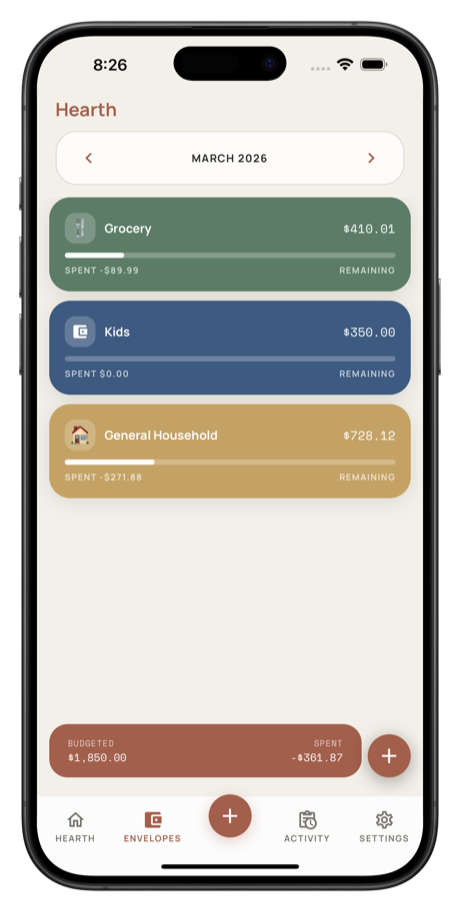
Envelopes explained
Envelope types, carry forward, moving between months, and archiving. How to keep your envelope list small and useful.
In short: an envelope is a category with a monthly budget and a running balance. Carry forward is for lumpy spending, archiving preserves history, and fewer envelopes beat more.
Needs, wants, and savings
Every envelope gets a type. It's a label for your own clarity, not a rule the app enforces:
- Needs: rent, groceries
- Wants: dining out, hobbies
- Savings: vacation fund, emergency cushion
Carry forward
Off, the envelope resets to its budget each month. On, leftovers roll into next month.
- Turn it on for lumpy spending: car maintenance, clothing. Quiet months build up a balance for the expensive one.
- Leave it off for weekly-rhythm spending: groceries, dining out. A fresh start keeps the signal clear.
Rule of thumb: lumpy and occasional, on. Steady and recurring, off.
Moving between months
The month picker at the top of the Envelope Index steps you through past months.
Each month's budgets are independent. Changing this month never touches last month. Use history to spot patterns, like an envelope that runs over every single month.
Archiving
Category no longer relevant? Archive it, don't delete it.
- Archive removes it from your active list but keeps all its history
- Delete is only for envelopes you created by mistake and never used
Keep the list short
Haven't looked at an envelope in two months? Fold it into a broader one, like "Everything else."
Every envelope costs a little attention, and attention is the point. The full reasoning: How Hearth thinks about money.
More guides
Still stuck? We're happy to help. Email support@hearthbudget.com.